The digital landscape is no longer just evolving; it has been completely re-engineered by artificial intelligence. As we navigate the middle of 2026, the strategies that worked even eighteen months ago are being replaced by intent-based, AI-optimized systems. For experts in the field, staying ahead means looking at the hard data. The latest digital marketing statistics 2026 show a global market projected to reach over $780 billion, with search and AI-driven content at the very center of that growth. If you are not optimizing for the answer engine era, you are likely losing visibility to competitors who are.
The 2026 Marketing Snapshot
- AI is the Baseline: 94% of marketers now use AI daily for content creation, but the focus has shifted from volume to citation-worthy accuracy.
- Search is Shifting: AI Overviews now appear on nearly 50% of all queries, forcing a pivot from keyword counting to providing direct answers.
- Local is High-Intent: 76% of people who conduct a near me search visit a physical business within 24 hours, making local presence more vital than ever.
How is AI Search Transforming SEO Strategy?
The most disruptive shift this year is the rise of Generative Engine Optimization (GEO). Traditional blue links are still there, but they are no longer the primary way users get answers. Current AI search trends 2026 indicate that AI-integrated search results reach billions of monthly users. For SEO experts, the goal has shifted: it is no longer about just ranking first; it is about being the source that the AI cites in its summaries.
Statistics show that a site ranking high in traditional organic results is much more likely to be featured in an AI Overview. However, visibility is fragile. Content that is not updated regularly shows a measurable decay in AI citations. This requirement has pushed content velocity to new heights, with businesses using AI marketing trends to increase their output volume by over 70% while focusing on factual depth.
The Impact of AI on Content Production
| Metric | Impact of AI Integration |
| Monthly Content Volume | +42% average increase in articles |
| Production Cost | -40% average reduction in overhead |
| Time Efficiency | 13 hours saved per week per marketer |
| Strategic Pivot | 61% of marketers report improved ROI |
What Do the Latest Paid Advertising Benchmarks Reveal?
While organic search builds long-term trust, paid media is where immediate scale happens in 2026. The digital marketing industry trends show that search advertising still accounts for nearly 41% of the global digital ad market. However, the how has changed. AI-driven PPC bid management is now the standard, significantly reducing wasted ad spend.
Retargeting continues to be a powerhouse for ROI. Customers are significantly more likely to convert after seeing a retargeting ad, and search activity for a brand typically rises by over 150% after a user is exposed to a display ad. If your omnichannel strategy isn’t linking display and search, you are leaving revenue on the table.
Are Local Growth Trends Favoring Smaller Businesses?
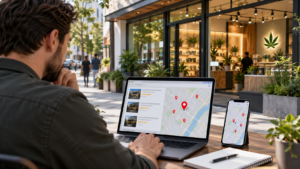
Local SEO remains one of the most reliable drivers of foot traffic and offline sales. According to the latest local SEO statistics, nearly half of all Google searches now have local intent. This is not just a trend; it is a fundamental shift in how people use mobile devices to interact with their immediate surroundings.
Key Local Search Behaviors in 2026
- Rapid Conversion: 28% of local searches result in a purchase within a single day.
- Trust Factors: 87% of consumers read online reviews before choosing a local service provider.
- The Proximity Rule: The majority of Local Pack positions are held by businesses within a 5-mile radius of the searcher.
- Map Dominance: Over 1 billion users rely on map-based discovery for finding new businesses.
For local experts, Google Business Profile management is the most valuable service you can offer, as it remains the primary bridge between a digital search and a physical visit.
Why is Web Design Pivoting Toward Immersive UX?
In 2026, a static website is often an ignored website. Digital marketing trends 2026 show that users now expect experiential content. This includes everything from AI chatbots that actually solve problems to interactive elements that help users visualize products.
Research suggests that consumers shop more often when they can interact with products virtually. We are seeing conversion rates jump significantly when interactive 3D elements are integrated into product pages. Beyond the visuals, technical basics still matter: over 50% of mobile users will still abandon a site if it takes longer than 3 seconds to load.
What Role Does AI Marketing Play in Personalization?
We have moved past simple name tags in emails. Current AI marketing trends focus on hyper-personalization at scale. Predictive behavioral analysis allows brands to anticipate what a customer needs before they even search for it.
The vast majority of consumers now expect these personalized interactions. Those who do it well see a 40% increase in revenue compared to those using generic messaging. This is particularly evident in email marketing, where AI-driven campaigns have boosted open rates by over 40% in high-performing industries.
How Should Experts Navigate the Trust Gap?
As the market is flooded with AI-generated content, a new trust gap has emerged. Human-led marketing is becoming a premium differentiator. While most marketers use AI for content creation, the most successful teams are those that use a human-in-the-loop approach to ensure quality and brand voice.
Audiences are beginning to tune out average, over-automated content. To combat this, experts are moving toward gated spaces like newsletters, podcasts, and high-production video where real expertise is harder to fake. Brand point of view is now the ultimate growth engine; volume no longer wins; conviction does.
Also read: How AI Services Are Changing Digital Marketing for Small Businesses
Digital Marketing Industry Benchmarks 2026
- Search Dominance: Google still holds a 90.8% share, but it is seeing competition from social search and AI-native platforms.
- Social Search: Over 55% of Gen Z prefer to start their product search on platforms like TikTok and Instagram.
- Video ROI: 82% of video marketers report a strong ROI, with a clear shift toward higher quality over sheer quantity.
As we look toward the end of the year, the digital marketing statistics 2026 make one thing clear: the middle ground is disappearing. You are either using AI to become hyper-efficient and personalized, or you are leaning into human creativity that cannot be replicated by a machine. At Do Better Marketing, we specialize in bridging that gap—using high-end data to fuel human-centric strategies that actually convert.
Frequently Asked Questions
What are the most important digital marketing statistics 2026 for SEO?
The most critical stat is that AI Overviews now appear on nearly 50% of queries, making citation-based optimization the new standard for organic visibility.
How is AI affecting the digital marketing industry trends this year?
AI is now a baseline tool for 94% of marketers, leading to a massive increase in content volume and a 40% reduction in production costs.
What are the key local SEO statistics for small businesses?
About 46% of searches have local intent, and 76% of those local searches lead to a physical store visit within 24 hours.
Are digital marketing trends 2026 moving away from social media?
No, social media is becoming a search engine itself. Over half of Gen Z users now use TikTok or Instagram as their primary tool for discovering local products.
What is the ROI of AI marketing trends in 2026?
Businesses using AI for personalization report a 40% increase in revenue and save an average of 13 hours per week on manual marketing tasks.